
Search Content
Displaying results 2721 - 2740 of 5101

The majority of the freshwater supply in west-central Florida comes from groundwater, most commonly the Floridan aquifer system. The Floridan aquifer system contains the largest aquifers within the state and stretches 100,000 square miles beneath Florida and parts of Alabama, Georgia and South Carolina. The Floridan aquifer system has been divided into the Upper Floridan aquifer and Lower Floridan aquifers. Between the aquifers are…

Use your water meter to check for leaks
- Turn off all faucets and water-using appliances and make sure no one uses water during the testing period. Remember to wait for the hot water heater and ice cube makers to refill and for regeneration of water softeners.
- Go to your water meter and record the current reading. Wait 30 minutes. (Remember: no water should be used during this period.)
- Read the meter again. If the reading has changed, you…

We all live in a watershed. That means that what we do on land impacts water bodies both near and far. To protect our water resources, we all must do our part. And sometimes that means preserving habitats that naturally protect water bodies from harmful pollutants, such as our wonderful wetlands!
What are wetlands?
The term wetland refers to a wide variety of aquatic habitats. Wetland ecosystems include swamps,…
Project WET (Water Education Today)Empowering educators to engage youth to understand water and solve local and global challenges.The Project WET Foundation develops water education resources, provides educator workshops, organizes special water events and has a worldwide network of educators and partners. To learn more about Project WET visit ProjectWET.org. Project WET Educator WorkshopsThe Southwest Florida…
The Southwest Florida Water Management District Governing Board Tuesday adopted the agency’s Fiscal Year (FY) 2006 millage rates and combined budget. The District’s millage rate remains the same as last year for the General Fund. The millage rates for the eight District Basin Boards also remain the same. FY2006 will run from Oct. 1, 2005, through Sept. 30, 2006.Downloadsample projects by…
WUP Introduction
A quick introduction to the Southwest Florida Water Management District’s Water Use Permitting (WUP) program and instructions on becoming an online registered user.
What is ePIC
A quick introduction to the Southwest Florida Water Management District’s new Online Water Use Permit Information Center (ePIC).
Intro to ePIC
An instructional video for utilizing the Southwest Florida Water Management District’s new Online…
On Tuesday, May 24, Heidi B. McCree was selected by unanimous vote as the first female Governing Board chair in the 44-year history of the Southwest Florida Water Management District.“I want to thank the Board for this honor and look forward to carrying on an important legacy,” McCree said. “We have achieved great things in west-central Florida, but there are many challenges yet to face to ensure an environmentally sustainable water resource. The keys will be maintaining our…
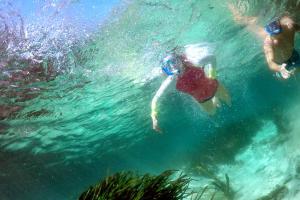
What is a spring? A spring is a natural opening in the ground where water flows directly from the aquifer to the earth’s surface. The source of this fresh water is from seasonal rainfall that soaks into the ground, which is referred to as groundwater. Springs form when groundwater is under pressure and flows up through an opening called a spring vent, supplying flow to a river or other water body. A spring can occur individually or as a group of many springs. The most…
From left: Sammy Malone, WYME Trailblazers; Fritz Musselmann. land resources director; Merrill Firmani and Elizabeth Shupe, South Creek Equestrian Riders.
Two young adults, two campground hosts and an equestrian group who participate in the District’s Land Resources Volunteer Program have been recognized by the President of the United States.
These volunteers received the President’s Volunteer Service Award at the January Governing Board meeting. The award,…
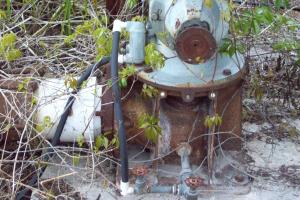
Assisting the agricultural community by improving the quality of ground water used for irrigation.
Existing wells located in the District’s southern and coastal areas often exhibit water quality conditions that are more highly mineralized with increased well depths. The use of highly mineralized ground water for irrigation purposes can adversely affect both agricultural yields and the water quality of downstream receiving water bodies. Efforts to reduce mineralized…
Four Southwest Florida Water Management District projects will help DeSoto County agricultural operations reduce groundwater pumping by an average of 50 percent or more.These projects are part of the District’s Facilitating Agricultural Resource Management Systems (FARMS) program, which is a cost-share reimbursement program that conserves water and protects water quality.Because three of these projects are expected to reduce withdrawals from the Upper Floridan aquifer…

An efficient irrigation system is designed to deliver the appropriate amount of water to match the needs of turfgrass and plant beds. Irrigation ZonesAn in-ground irrigation system typically waters the landscape in sections instead of all at once. These different sections are referred to as “irrigation zones.” Properly designed irrigation zones are important for three key reasons:
- Not all plants within the landscape need the same amount of water.
- …
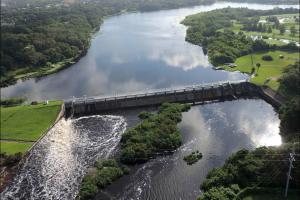
OverviewMinimum flows are limits established by the District’s Governing Board for surface watercourses to prevent significant harm to the water resources or ecology that may result from water withdrawals. Florida Statutes require the development of a recovery strategy when existing flows fall below the applicable minimum flow. The District has established minimum flows for the Lower Hillsborough River to help protect the river’s ecological health…

Clockwise from top left: Chair Todd Pressman; Vice Chair Ronald E. Oakley; Secretary Hugh M. Gramling; Treasurer Sallie Parks.
Two Governing Board members are moving into new leadership roles this year, while two others have been given their first opportunity to serve as officers.
Todd Pressman was unanimously elected by his peers in May to serve as the District’s Governing Board chair. Pressman served as the Board secretary and vice chair before being…
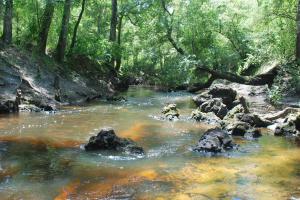
KarstMuch of Florida’s landscape is composed of “karst” landforms. Karst terrain is a land surface produced when bedrock — mostly limestone in Florida — dissolves slowly over time as acidic rainwater passes through it. Karst terrain provides a direct connection between surface waters and groundwater and is characterized by springs, sinkholes and caverns.Springs Springs are a common feature of karst topography. They also serve as key tributaries of the…
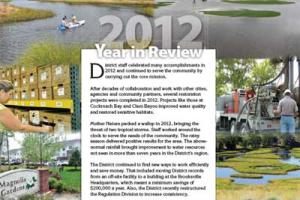
District staff celebrated many accomplishments in 2012 and continued to serve the community by carrying out the core mission.
After decades of collaboration and work with other cities, agencies and community partners, several restoration projects were completed in 2012. Projects like those at Cockroach Bay and Clam Bayou improved water quality and restored sensitive habitats.
Mother Nature packed a wallop in 2012, bringing the threat of two tropical storms. Staff…
At its July 24 meeting, the Southwest Florida Water Management District’s Withlacoochee River Basin Board adopted a fiscal year 2008 (FY2008) millage rate of 0.2308 mill, which is .03 less than the current fiscal year. This reduction is in accordance with the tax reduction mandated by the Florida Legislature.The FY2008 millage rate has been set equal to 97 percent of the rolled-back rate in compliance with House Bill 1B, the tax reform legislation signed into law by Gov.…