
Search Content
Displaying results 3801 - 3820 of 4146
The Southwest Florida Water Management District’s Governing Board today celebrated two District projects that received an Award of Excellence at the Hillsborough County Planning Commission 26th Annual Community Design Awards. The Community Design Awards recognize projects that contribute to the quality of life in Hillsborough County.Both projects were managed by the Surface Water Improvement and Management (SWIM) Program.Newman Branch Creek Habitat Restoration…
The Southwest Florida Water Management District’s Governing Board voted Tuesday to extend the currentWater Shortage Order, which restricts lawn watering throughout the District to one-day-per-week, until Sept. 30.The originaldeclaration of water shortage, which was…
Who:Representatives from the Southwest Florida Water Management District’s Alafia River Basin Board, the District’s Surface Water Improvement and Management (SWIM) program, Tampa Electric Company, Protecting the Environment through Ecological Research (PEER,) the Pinellas County Environmental Fund and National Oceanic and Atmospheric Administration (NOAA)What:Volunteers will participate in planting 6,000 marsh grass and upland plants before a tree planting…
Who: Southwest Florida Water Management District Governing and Basin Board members and Executive Director David L. Moore; St. Petersburg Mayor Rick Baker; The Pier Aquarium Board of Director’s President Lari JohnsonWhat: The District and The Pier Aquarium are celebrating the dedication of an education station in honor of Roy G. Harrell, Jr., who served on the District’s Governing Board from Nov. 1985 until Feb. 1998.The education station, located at The Pier…
The Southwest Florida Water Management District is doing double duty next weekend to spread the word about water conservation in Pinellas County.The District is bringing the comforts of a private, water-conserving restroom trailer to Pinellas County’s Earthfest and the Mainsail Arts & Crafts Show.Earthfest is April 16 at Pinellas County Extension Service office in Largo. The Mainsail Arts & Crafts Show is April 16-17 at Vinoy Park in St. Petersburg.“…
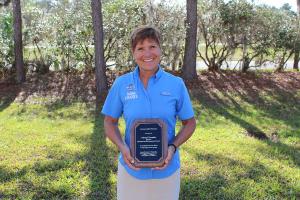
The District’s Governing Board recognized Cheryl Paradis as one of this year’s springs community partners, while declaring April Springs Protection Awareness Month.
Paradis has served as the director and lead teacher at the Springs Coast Environmental Education Center on the Weeki Wachee River since 2008. Each year, she passionately educates approximately 8,000 Hernando County students, teachers and families about Weeki Wachee Springs and how to protect the…
Virginia Frissell, a science resource teacher at Twin Lakes Elementary School in Tampa was named The Southwest Florida Water Management District’s Water Steward of the Year.Frissell was chosen for her “Water Everywhere — Put It First — Make It Last” project. Her project was chosen from seven finalists. Twin Lakes Elementary is in the District’s Hillsborough River Basin.Frissell was honored at the Governing Board’s October meeting.…
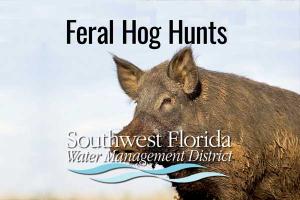
District land managers plan to hold a series of hog hunts on District lands throughout the year to help reduce the feral hog population.
Feral hogs, which are not native to Florida, can cause damage with their broad snouts and can leave an area looking like a plowed field. They also prey on native wildlife, compete with native species for food and transmit diseases to other wildlife, livestock and humans. Additionally, hogs may facilitate the spread of exotic plant…
The Southwest Florida Water Management District is opening its doors and welcoming those interested in helping protect the region’s water resources by hosting a career and internship fair at its Sarasota service office. The District has career and internship opportunities across a wide variety of disciplines, including administrative, business and finance, trades work, mechanical, heavy equipment operation, well drilling, natural sciences and engineering, and much more…
Almost half of the counties within the Southwest Florida Water Management District’s 16-county region are now under a Phase III “Extreme” Water Shortage Alert.The District identifies four possible levels of water shortage, beginning with “moderate” and increasing in intensity through “severe,” “extreme” and “critical.”With river flows, aquifer levels, and lake levels remaining far below normal, the region…
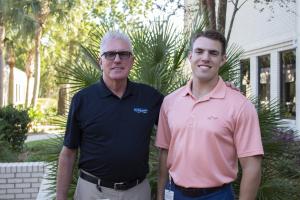
District staff often will say their co-workers feel like family. But for some employees, it really is true. Here’s a few stories of family connections at the District:
Tradesworker Tyler Ledington was excited to join the District eight months ago. Growing up, he saw how the District provided for his mom, senior administrative assistant Susie Holton. Susie, a 35-year veteran of the District, took Tyler to many “Take Our Daughters and Sons to Work Day” events.
The…
At its June 11 meeting, the Southwest Florida Water Management District’s Coastal Rivers Basin Board adopted a proposed fiscal year 2010 (FY2010) millage rate of 0.1885 mill, which is the same as the current fiscal year. The Coastal Rivers Basin Board covers portions of Citrus, Hernando and Pasco counties.This millage rate, combined with a reduction in taxable property values as estimated by the county property appraisers, will result in an estimated 11.62 percent…

Whether you were a scientist, diver or photographer, water quality was the hot topic at the recent Your Water, Your World workshop held in Brooksville.
The event, organized by the Hernando County Groundwater Guardian Committee, brought together community leaders such as District Governing Board members Tommy Bronson and George Mann to discuss issues affecting area water quality and ways to restore and protect local water resources. Presenters from various…

The Southwest Florida Water Management District’s (District) Governing Board declared April Water Conservation Month at its March meeting. April is historically one of the driest months of the year and typically marks the peak demand season for public water suppliers. The District also recently launched the Water 101 campaign to educate new and existing residents as well as communities about how they can help protect local water resources and save water and money.The…
The Southwest Florida Water Management District is extending a water shortage emergency authorization that allows Tampa Bay Water to withdraw additional water from the Alafia River to continue to fill the C.W. Bill Young Regional Reservoir.As of Sept. 15, the reservoir had about 11.2 billion gallons in storage. When full, the reservoir stores approximately 15 billion gallons of water.The executive order, which was scheduled to expire Sept. 30, has been extended through Dec…
The Southwest Florida Water Management District and Pasco County are working together to gather input needed to improve identification of flooding risks in the county.The information will be used to update area floodplain information and develop preliminary Federal Emergency Management Agency (FEMA) Flood Insurance Rate Maps (FIRMs). Most of the current FIRMs are 10 to 30 years old and are outdated because of natural and physical changes caused by land use, development and…
District extends and modifies emergency order allowing increased withdrawals from the Alafia River »
The Southwest Florida Water Management District is extending a water shortage emergency authorization that allows Tampa Bay Water to withdraw additional water from the Alafia River because Tampa Bay Water cannot use the full storage capacity of the C.W. Bill Young Regional Reservoir.As of Dec. 15, the reservoir only had about 3 billion gallons in storage. When full, the reservoir stores approximately 15 billion gallons of water. Over the summer rainy months, Tampa Bay…
The Southwest Florida Water Management District has revised and extended the water shortage emergency order for the Peace River/Manasota Regional Water Supply Authority to protect the drinking water supply for more than 250,000 residents.The executive order signed Thursday will allow the Authority to continue withdrawals from the Peace River at an increased rate as a means of meeting current water demand and storing additional water in its reservoir and two aquifer storage…
The Southwest Florida Water Management District has reached an agreement with Leigh and Lynn Hampton and LSL Hampton Family Ltd. Partnership, LLP to purchase their property, including settlement costs, for $39,239,000 as part of the Lake Hancock Lake Level Modification Project.The Hampton�s property, which includes 1,177 acres, is located southwest of the intersection of Thornhill Road and Winter Lake Road and borders the northeastern shore of Lake Hancock. Once this…
The Southwest Florida Water Management District’s Governing Board voted Tuesday to extendthe current Water Shortage Order, which restricts lawn watering throughout the District to one-day-per-week, until Nov. 30.The water shortage order, which was declared by the District’s Executive Director David L. Moore, went into effect Jan. 16 and was slated to expire July 31. It was…