
The amount of fresh water on the planet does not change. Through nature, all water has been used and reused since the beginning of time. This natural process is known as the water cycle.
Using advanced technology to recycle water merely accelerates a natural process. Purified recycled water is reclaimed water that undergoes a multi-step, rigorous purification process that can be used for drinking, cooking and bathing. The purification techniques use proven technology that makes the water safe. Discover more about this alternative water resource.
The Basics
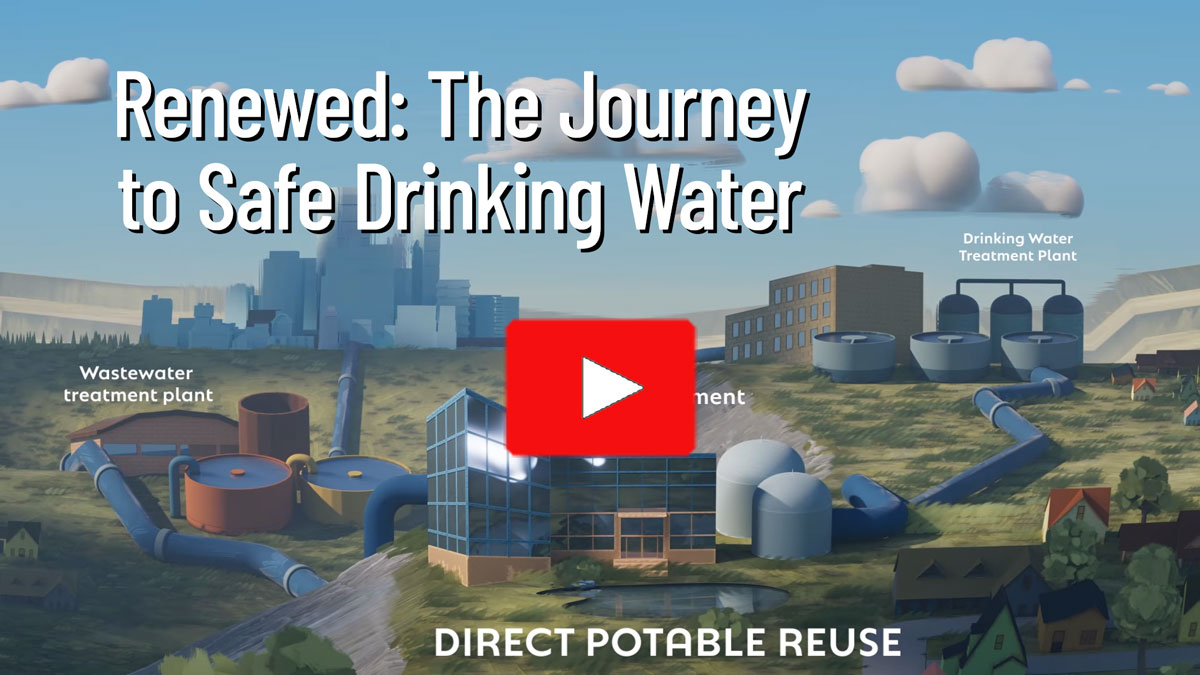
- Purified recycled water is reclaimed water that undergoes a multi-step, rigorous purification process that can be used for drinking, cooking and bathing. It is purified to be better than drinking water standards, making it some of the cleanest water in the world.
- The amount of fresh water on the planet does not change. Through nature, all water has been used and reused since the beginning of time. This natural process is known as the water cycle. Using advanced technology to recycle water merely accelerates a natural process.
The Treatment
- Treatment for purified recycled water is proven safe for public health and the environment. The processes used to treat purified recycled water provide a safe, reliable and sustainable drinking water supply.
- First, the water goes through multiple advanced pretreatment processes.
- Next, the water receives additional filtration processes to remove microorganisms, including viruses, bacteria and other pollutants.
- Although the water is exceptionally clean at this point, the last step provides additional layers of protection through advanced disinfection treatments such as ultraviolet light, ozone and peroxide. These disinfection processes ensure high-quality drinking water.
The Need
- Floridians use nearly 6.6 billion gallons of water per day, with an estimated 1,000 people moving to the state daily and are projected to use an additional 755 million gallons per day by 2045. Our supply is not endless, and by including purified recycled water, we can ensure there is plenty of water for everyone. This is part of our state’s plan to be more sustainable, diversify its water sources and protect the environment. The need to plan for and diversify alternative water sources is vital to meet projected water needs as well as respond to drought, protect the environment and ensure a robust economic future.
- Reusing water relieves pressure on Florida’s water resources and ecosystems. The more water we recycle, the more water remains in our rivers and springs for the fish, plants and wildlife that rely upon them.
The Regulation
- Purified recycled water meets or exceeds strict state and federal drinking water standards.
- Highly trained and certified treatment operators are responsible for maintaining safe, functioning water systems in Florida. The Florida Department of Environmental Protection (DEP) takes its responsibility seriously to ensure that water utilities provide safe, reliable drinking water to Floridians, including those using purified recycled water.
The Future
- Florida is the national leader in water reuse, using 56 percent of total domestic wastewater. However, more than 751 million gallons of treated water per day are disposed into Florida’s surface water bodies or deep disposal wells. Through advanced treatment and continued conservation efforts, this unused source could supply Florida with most of its projected water needs.
- Various utilities in Florida already are planning for purified recycled water as a future water source because of our dwindling water supply in lakes, springs and aquifers.
- Purified recycled water is used reliably and safely in the United States and around the world.
- Florida officially adopted statewide rules for purified recycled water in February 2025. Drafted by the Florida Department of Environmental Protection, the new rules ensure purified recycled water is treated through multistep processes to remove contaminates using advanced treatment technologies resulting in clean, safe drinking water that meets or exceeds strict federal and state drinking water safety standards. As a result, the new rules help protect people and the environment while ensuring a safe and sustainable water supply for all Floridians.