
Search Content
Displaying results 1821 - 1840 of 4998
The Southwest Florida Water Management District urges year-round water conservation. Water levels may rise and fall, but our water resources remain limited. The District encourages efficient, non-wasteful uses of water to sustain our high quality of life. For more information about ways to conserve water, contact the District at 1-800-423-1476 or visit the District's website.
H₂O Zone »
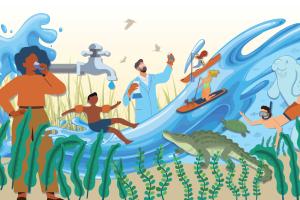
Welcome to the H₂O Zone! To begin your exploration of all things water, click on a topic using the tabs at the top of the page or the links below.Pay special attention to the words in bold on each page for vocabulary. Not sure what something means? Check the word glossary.Water Basics

In the Bathroom:
- Flush less — remember the toilet is not an ashtray or wastebasket.
- While brushing teeth, shaving, etc., turn off the water.
- When cold water will do, avoid using hot water.
- Take shorter showers — 5 minutes or less.
- In the shower, wet yourself down, turn the water off, lather up, then turn the water on to rinse off soap.
- Use less water for bathing — close the drain first and fill tub only one…

Word Glossary
Alternative Water Supply (AWS)
Includes the use of a nontraditional source of water to help meet different freshwater needs of a community. Examples include reusing wastewater or treating seawater through a desalination plant.
Aquifer
An aquifer is an area underground that holds water in the gaps between rock, sand or gravel, sort of like an underground lake or stream.
Compost…

We All Live in a Watershed
Land is very important to the water cycle and shares a strong connection to our water resources. Did you know that everything we do on land can affect the health of our water? That is because we all live in a watershed!
A watershed is any area of land that water flows across or through. Where is the water going? Downhill of course. Water in a watershed trickles and flows toward a common body of…
Water Use Permit Bureau ChiefAs bureau chief of the Water Use Permit Program, April is responsible for overseeing water use permit evaluation, water use permit compliance, well construction permitting and demand management.April has 15 years of experience related to challenging water use permitting considerations. She previously held various significant roles with the District, including Water Use Evaluation and Compliance manager and hydrogeologist.April earned a bachelor’s…
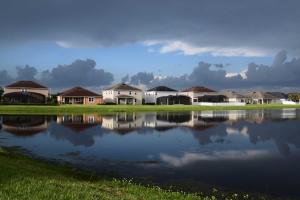
In recent years the number of people living in the Alafia River watershed has increased dramatically. An increase in population causes a greater demand on water resources and a reduction in the amount of wildlife habitat. Efforts have been made to meet the increased demands for water and to restore and protect natural ecosystems within the watershed.
Reservoir
The C.W. “Bill” Young Regional Reservoir is located in the Alafia River watershed. It can store 15 billion…
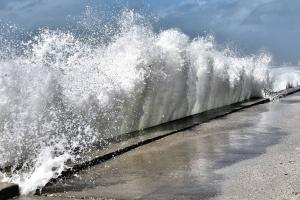
The word “resiliency” can be described as the ability to recover quickly from disasters and adapt to future conditions. The word also refers to building defenses against the impacts of climate change. Coastal Florida is vulnerable to impacts from climate change, which may include temperature extremes, intensified storms, increased flooding and sea level rise. West-central Florida has already seen some of these adverse impacts, and projections show the impacts will…
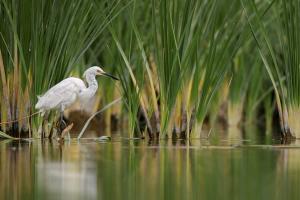
The Green Swamp is recognized by the state of Florida for its ecological and hydrological importance. There are several unique characteristics of the area. The Green Swamp can store surface water and slow the flow of floodwaters while sustaining rivers and streams. Its relatively high elevation, together with a shallow depth to the aquifer, keeps water levels high. The water table for much of the year stands above the potentiometric surface of the Floridan aquifer, providing…
What are MFLs?“MFLs” is short for minimum flows and minimum water levels. Minimum flows are set for rivers, streams, estuaries, and springs, while minimum water levels are established for lakes, wetlands, and aquifers. In short, an MFL sets a limit on how much water can be withdrawn from a water resource to prevent significant harm occurring to the water resources or the ecology of the area.Why does the Southwest Florida Water Management District set MFLs?Florida law (…
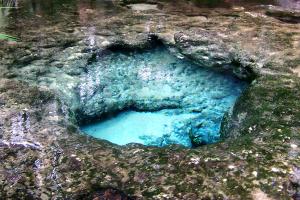
What springs are located within our District? There are more than 200 springs within the District. There are five first-magnitude spring groups in the District. First-magnitude springs, which are the largest springs by volume of water discharged, release 64.6 million gallons per day or more. The five springs are: Rainbow River, Crystal River/Kings Bay, Homosassa River, Chassahowitzka River and Weeki Wachee River. Together, they discharge more than one…
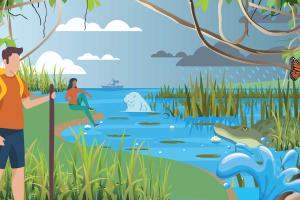
The majority of the freshwater supply in west-central Florida comes from groundwater, most commonly the Floridan aquifer system. The Floridan aquifer system contains the largest aquifers within the state and stretches 100,000 square miles beneath Florida and parts of Alabama, Georgia and South Carolina. The Floridan aquifer system has been divided into the Upper Floridan aquifer and Lower Floridan aquifers. Between the aquifers are…
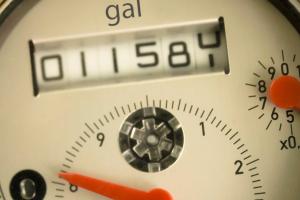
Use your water meter to check for leaks
- Turn off all faucets and water-using appliances and make sure no one uses water during the testing period. Remember to wait for the hot water heater and ice cube makers to refill and for regeneration of water softeners.
- Go to your water meter and record the current reading. Wait 30 minutes. (Remember: no water should be used during this period.)
- Read the meter again. If the reading has changed, you…
We all live in a watershed. That means that what we do on land impacts water bodies both near and far. To protect our water resources, we all must do our part. And sometimes that means preserving habitats that naturally protect water bodies from harmful pollutants, such as our wonderful wetlands!
What are wetlands?
The term wetland refers to a wide variety of aquatic habitats. Wetland ecosystems include swamps,…
What Is Stormwater Runoff?
In Florida, stormwater runoff occurs during or after a rainfall event. Stormwater from the rain flows over impervious, or hard, surfaces like driveways, sidewalks, streets, parking lots and roofs, where it is unable to percolate (filter or seep) into the ground. This unfiltered water then reaches our neighborhood streams, ponds, lakes, bays, wetlands and oceans. It can even make its way into…
The purpose of the Public Supply Advisory Committee (PSAC) is to provide professional and technical input into District programs and activities.This includes regulatory programs, rule revisions, water conservation activities, water resource planning, water resource and supply development projects, research and other water resource management projects that relate to the environment. Subject matter considered by the PSAC shall relate to the statutory duties and…