
Search Content
Displaying results 1 - 20 of 1328
The Southwest Florida Water Management District welcomes comments and questions from the public in accordance with the District’s Social Media Policy (Policy). However, staff reserve the right to report or remove any postings that violate this Policy. That includes posts that:
- Contain vulgar, explicit, or obscene language and/or images.
- Contain threats, harassment, libel, or incite violence and/or illegal activity.
- Spam from bots.
- Posts with…
State of Florida Resources Florida Department of Agriculture and Consumer Services The Department's mission is to safeguard the public and support Florida's agricultural economy. …
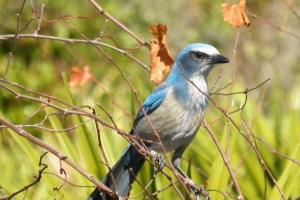
Birding »
Whether you are a casual viewer or an avid birder working on your life birding list, bird-watching opportunities abound on all District lands.Sites with the best bird-watching opportunities are part of the Great Florida Birding Trail and are listed in the column on the right side of this page. Maps of the west coast portion of the trail can be obtained from Florida Fish and Wildlife Conservation Commission web site at…
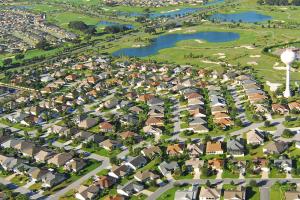
Water 101 for Communities Welcome community leaders! As decision makers, your choices – from when to irrigate to which plumbing fixtures you use - can have significant impacts on your community’s water use. That’s why we’re here to help by teaching best practices with online classes for your employees, offering educational material for you and your communities and sharing water-saving project reimbursement opportunities.Online Water Conservation Classes The…
Your Questions AnsweredMarch 2019Q: What are stormwater ponds and why do we need them?A: A stormwater pond is designed to collect and manage runoff from rainwater. When rainwater lands on rooftops, parking lots, streets, driveways and other hard surfaces, the rainfall that doesn’t soak into the ground (stormwater runoff) flows into your neighborhood stormwater pond through grates, pipes, shallow swales or ditches.…
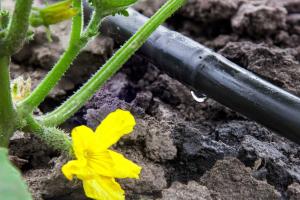
Micro-irrigation, commonly referred to as “drip” or “low-volume” irrigation, emits a lower volume of water compared to traditional sprinkler heads. Micro-irrigation delivers water directly to plant roots and is recommended for plant bed areas or potted plants, as they require less water than turfgrass.Types of micro-irrigation include:BubblersIn-Line Drip TubingMicro-SpraysPoint Source Emitters …
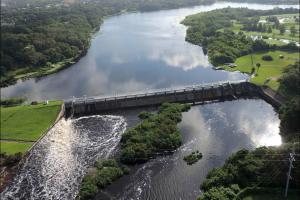
OverviewMinimum flows are limits established by the District’s Governing Board for surface watercourses to prevent significant harm to the water resources or ecology that may result from water withdrawals. Florida Statutes require the development of a recovery strategy when existing flows fall below the applicable minimum flow. The District has established minimum flows for the Lower Hillsborough River to help protect the river’s ecological health…
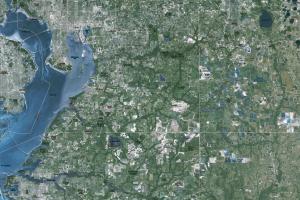
Interactive Map Gallery
The District’s new map gallery contains dynamic, interactive maps created by District staff. This gallery contains general purpose and District-specific maps. VIEW MAP GALLERY »
Aerial Photography
The District provides an extensive collection of digital aerial photos (DOQQ: Digital Orthophoto Quarter Quadrangle) …
March 2026Q: Why is it important to use best practices when visiting rivers and springs?A: The District has found direct links between river recreational use and environmental damage. For example, visitors leaving kayaks while on the river have trampled vegetation and eroded riverbanks and sand point bars. Also, numerous trees have been damaged from climbing and rope swinging. Over time, these actions can have negative long-term effects…
Privacy Policy Under Florida law, email addresses are public records. If you do not want your email address released in response to a public-records request, do not send electronic mail to any Southwest Florida Water Management District (District) email address. Instead, contact this office…
The Southwest Florida Water Management District (District) will host student internship career fairs Saturday, Aug. 26, from 9 a.m. to 11 a.m., to recruit graduating high school seniors and college students. The fairs will take place simultaneously at District Headquarters, located at 2379 Broad Street in Brooksville, and at the District’s Tampa Service Office, located at 7601 U.S. Hwy. 301 N. in Tampa.Student internships are available in several areas, including…
Your Questions Answered
January 2022
Q: What is a prescribed burn?
A: A prescribed burn, also known as a prescribed fire or a controlled burn, is a fire intentionally ignited by land managers to meet specific land management goals. The burns follow a written prescription which outlines: the defined fire treatment area, goals and objectives of the burn, specific weather conditions that are required, the tactics staff will use,…
Your Questions Answered
August 2019
Setting prescribed fires in controlled settings can reduce the risk of wildfires burning out of control, as many Floridians witnessed during the state’s wildfire emergency in 2017. Chris Reed, Land Management Manager for the Southwest Florida Water Management District, explains why the District’s prescribed burn efforts are critical to keeping Florida’s ecosystem in balance.
Q: What is a…
December 2024Q: What is FARMS?A: The Facilitating Agricultural Resource Management Systems, or FARMS program for short, is designed to serve as an incentive to the agricultural community to promote water quantity, water quality and natural systems BMPs to conserve groundwater use and protect water quality in the springs. The program is an agricultural cost-share reimbursement program that reduces groundwater withdrawals from the Upper…
Your Questions Answered
June 2019
The rainy season is upon us and it’s a great time to conserve potable water by watering your lawn less. The Southwest Florida Water Management District’s Senior Conservation Education Coordinator Katherine Munson explains why homeowners should, “Watch the Weather, Wait to Water.”
Q: Why are the summer months the best time for outdoor water conservation?
A: During the summer months of June…
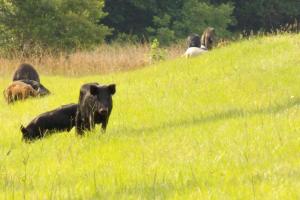
What is a feral hog?Feral hogs are wild animals originated from domestic livestock. The Southwest Florida Water Management District (District) considers feral hogs an invasive exotic species.What kind of damage can a feral hog do?They negatively impact wetlands and other habitats by "rooting" up the soil searching for food. They prey on native wildlife, compete with native species for food and transmit diseases to other wildlife, livestock and humans.How did feral hogs get…