
Search Content
Displaying results 561 - 580 of 2166
The Southwest Florida Water Management District (District) invites the public to a virtual workshop Thursday, Oct. 29, from 5:30 to 7 p.m. The purpose of the virtual workshop is to allow for public comment on recommended minimum flows for the Lower Peace River in Charlotte and DeSoto counties.
In accordance with the directive in the Florida Department of Environmental Protection’s Emergency Order to conduct all public meetings electronically, members of the public may…

The Southwest Florida Water Management District's "Little Manatee River Southfork Tract":http://www2.swfwmd.state.fl.us/hoghunt/littlemanatee.php will be temporarily closed to the public for wild hog hunts Nov. 6-8.Only permitted hunters will be allowed on the property during these dates. All of the permits for these hunts have been sold."Little Manatee River Southfork Tract":http://www2.swfwmd.state.fl.us/hoghunt/littlemanatee.php is located at 29400 SR 62, Duette in…
The Southwest Florida Water Management District’s Pinellas-Anclote River Basin Board Wednesday adopted a reduced millage rate of .3600 mill for fiscal year 2009 (FY2009). This millage rate is .0101 lower than the FY2008 millage rate. In June, the Board adopted a millage rate of .3701 but today Basin Board members said declining property values and the economy influenced their decision to lower it. The Pinellas-Anclote River Basin Board area covers Pinellas County and…
Representatives from the Citrus County Aquatic Services were honored today with a Water Stewardship Award from the Southwest Florida Water Management’s Withlacoochee River Basin Board.The board chose the Citrus County Aquatic Services’ ‘Moccasin Slough Water Conveyance Canal’ project to receive the Water Stewardship Award because the project entails the restoration of a “once natural” water conveyance area that, after several decades, had…
Representatives from the Pinellas County Highway Department were honored today with a Water Stewardship Award from the Southwest Florida Water Management’s Pinellas-Anclote River Basin Board.The board chose the Pinellas County Highway Department’s “McMullen Booth Road at Curlew regional Mitigation Facility” project because the former spoil site is in Pinellas County adjacent to the Lake Tarpon Outfall Canal. Although the project is permitted for…
The Southwest Florida Water Management District’s Coastal Rivers Basin Board Thursday adopted a fiscal year 2009 (FY2009) millage rate of 0.1885 mill, which is the same as the current fiscal year. The Coastal Rivers Basin Board covers portions of Citrus, Hernando and Pasco counties.This millage rate, combined with a reduction in taxable property values as certified by the county property appraisers, will result in an estimated 9.9 percent decrease in ad valorem…
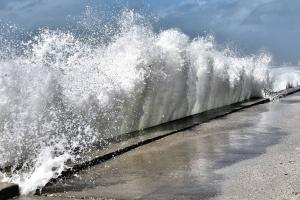
The word “resiliency” can be described as the ability to recover quickly from disasters and adapt to future conditions. The word also refers to building defenses against the impacts of climate change. Coastal Florida is vulnerable to impacts from climate change, which may include temperature extremes, intensified storms, increased flooding and sea level rise. West-central Florida has already seen some of these adverse impacts, and projections show the impacts will…
The purpose of the Environmental Advisory Committee (EAC) is to provide input into District programs and activities.This includes regulatory programs, rule revisions, water conservation activities, water resource planning, water resource and supply development projects, research and other water resource management projects that relate to the environment. Subject matter considered by the EAC shall relate to the statutory duties and responsibilities of the District.EAC members…
About the Watershed Management ProgramThe District takes a watershed approach to managing water and water-related resources within its boundaries. By doing so, all the characteristics of each watershed can be evaluated to reflect the real, interconnected nature of Florida’s water resources. This increases the District’s ability to clearly identify, prioritize and address issues related to the area’s water resources. The Watershed Management Program provides a method to…
The Southwest Florida Water Management District’s Peace River Basin Board Friday adopted a fiscal year 2009 (FY2009) millage rate of 0.1827 mill, which is the same as the current fiscal year. The Peace River Basin Board area includes Hardee, DeSoto and portions of Polk, Highlands and Charlotte counties.This millage rate combined with a reduction in taxable property values as certified by the county property appraisers, will result in an estimated 10 percent decrease in…
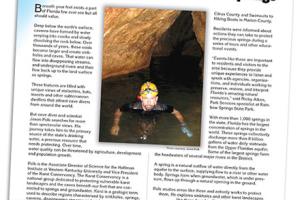
Photo Courtesy Jason Polk
Beneath your feet exists a part of Florida few ever see but all should value.
Deep below the earth’s surface, caverns have formed by water seeping into cracks and slowly dissolving the rock below. Over thousands of years, these voids become larger and create sinkholes and caves. That water can flow into disappearing streams, and underground rivers and then flow back up to the land surface as springs.
These features are…