
Search Content
Displaying results 41 - 60 of 5027
Your Questions Answered
May 2021
Florida’s population is growing with an average of 1,000 people moving to the state every day. If you’re new to Florida, you may not be familiar with the state’s water resources or how to do your part when it comes to water conservation. Southwest Florida Water Management District (District) Lead Communications Coordinator Robin Grantham shares water-related tips for life in the Sunshine State.
Q: How…
Charlotte CountyRestriction InfoReport ViolationsCharlotte County(941) 764-4300(941) 764-4309Punta Gorda(941) 575-3339(941) 639-4111Citrus CountyRestriction InfoReport…
Your Questions Answered
November 2022
Q: What is the SWIM Program?
A: The Surface Water Improvement and Management or SWIM Program evaluates priority water bodies, identifies issues and drivers, and implements projects to improve water quality and habitat. In 1987, the Florida Legislature established the SWIM Act to protect, maintain, and restore Florida's surface water bodies. The Act required the five water…
November 2024Q: How can I save water when preparing holiday meals?A: Defrost frozen foods in the refrigerator or the microwave instead of running hot water over them. Rinse vegetables and fruits in a sink or pan filled with water instead of under running water. This water can then be reused to water houseplants. A running faucet can use approximately 2 gallons of water per minute.Q: What can I do to reduce water…
November 2023Q: How can I save water when preparing holiday meals?A: Defrost frozen foods in the refrigerator or the microwave instead of running hot water over them. Rinse vegetables and fruits in a sink or pan filled with water instead of under running water. This water can then be reused to water houseplants. A running faucet can use approximately 2 gallons of water per minute.Q: What can I do to reduce…
December 2023Q: Why is conserving water outdoors important?A: Typically, outdoor water use accounts for about 50 percent of water consumed by households, so it’s important to pay attention to your outdoor water use. If using a permanent inground irrigation system, conduct regular maintenance to ensure the system is working properly and make seasonal adjustments throughout the year. If using a non-permanent above-ground…
Learn about current District water restrictions, or view local government water restrictions contact information.
Your Questions Answered
January 2021
The Southwest Florida Water Management District (District) is celebrating 60 years of protecting the region’s water resources. The District was established in 1961 as a flood protection agency. Since then, its responsibilities have grown to include managing the water supply, protecting water quality and preserving natural systems that serve important water-related functions. Executive Director Brian Armstrong…
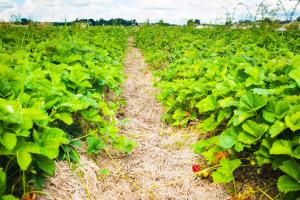
Online Application FormsLogin to Online Application »Depending on the appropriate use type, the following completed supplemental forms should be uploaded during the online application submission. The following supplemental forms are also necessary if apply…

Southwest Florida Water Management District (District) is one of five regional agencies directed by state law to protect and preserve water resources within its boundaries. Established in 1961 to operate and maintain several large flood protection projects, the District’s responsibilities have expanded to include managing water supply and protecting water quality and the natural systems — rivers, lakes, wetlands and associated uplands.Origin and EvolutionThe Southwest…

Water is restless; it likes to move on a constant journey known as the water cycle. Gravity makes it flow downhill, off your roof, into creeks, down rivers and even over giant waterfalls. Some water soaks into the ground through percolation, but most of it ends up filling the oceans, which cover over two-thirds of the planet.
The water cycle doesn’t end in the oceans though. Water at the sea’s surface is able to…
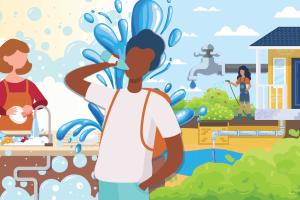
To conserve water means to use it wisely and to not be wasteful. Conserving water is a very important part of making sure there is enough water to meet the needs of humans and the environment. And even though we might have enough fresh water available to meet our needs today, we also need to plan for the future.
The Southwest Florida Water Management District (District), along with other local governments and organizations, are responsible for managing…
Do you know where your drinking water comes from? You might have poured it from a tap or bought it at the store, but it had to come from somewhere before that. Any guesses?
The ocean? That would be a good guess because the oceans contain most of earth’s water, about 97%! But would you drink a glass of seawater?
No! The salt would make you sick.
We need fresh water. Not just any fresh water though. Did you know most of the world’s fresh water is frozen…
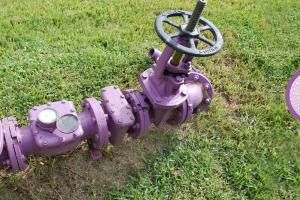
Reclaimed water is highly treated wastewater and can be used for irrigation and other uses to extend our water supplies.Our RoleThe District works with local utilities and water users to maximize the beneficial use of reclaimed water as an alternative water supply. The use of reclaimed water helps meet current and future water supply needs in the region and is a vital component of the District’s…
In addition to groundwater, Florida also has many different surface water bodies. Surface waters are those found above ground. In Florida, that includes around 7,700 lakes, 50,000 miles of rivers and streams, and 700 springs! Surface waters are home to many different types of plants and animals. They also provide a place for people who live in Florida, or come to visit, to enjoy many recreational activities, such as swimming, kayaking,…
Water utilities can reduce per capita water use and maintain revenues by using water-conserving rate structures. Your water management district can provide information and tools to help utilities accomplish these goals.Why Use Rates to Conserve?In many areas of Florida, water supplies are stressed as growth fuels new demand for water. To ensure a sustainable water supply, utilities are tapping alternative sources including conservation. The pricing of water is one way to…
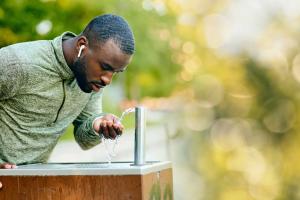
Recycled Water – Safely Supplying Florida’s Future. What is Potable Reuse?Potable reuse refers to highly treated recycled water from various sources people can use for drinking, cooking or bathing.Is Recycled Water Safe for People to Drink?Yes. This type of recycled water uses proven technology to make the water safe. The water meets or is a higher quality than strict state and federal drinking water …
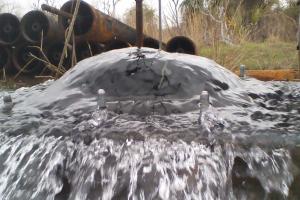
Improving Water Quality Through Well Plugging Every day, millions of gallons of water are contaminated or wasted throughout the Southwest Florida Water Management District by free-flowing, improperly constructed, deteriorated or abandoned artesian wells.Many of these wells were built before current well construction standards were established. Therefore, many of the wells:
- Do not have enough casing and expose several aquifers of varying water quality to one…