Building A Wetland
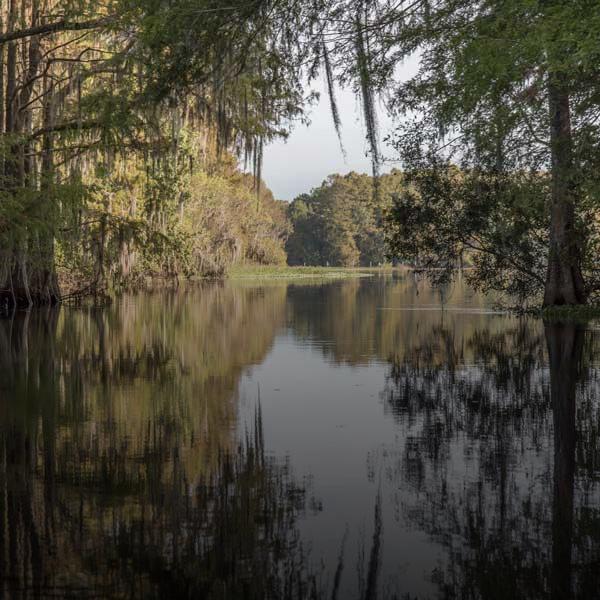
Wetland. Wasteland. The two words were synonymous until recently. Today wetlands are valued not only for the habitat they provide to a variety of plant and animal species, but also for the benefits they bring to our cities and water resources. Here are a few examples:
- During storms, wetlands slow down floodwaters as they enter rivers and streams. By doing so, wetlands reduce flooding.
- Wetlands help filter sediment and pollution from stormwater runoff before it reaches rivers and streams.
- Slowing the rate of soil erosion is another function of wetlands.
The Southwest Florida Water Management District preserves wetlands for the water's sake. With your class, you can build a wetland model that will demonstrate these functions to the students and show why wetlands are now considered precious.
Learning goals
- To teach the function of wetlands
- To stimulate thought about the role wetlands play in the world
Subjects
- Science
- Social Science
Materials
- glass lasagna pan (or clear sweater box)
- modeling clay
- turkey baster
- strip of indoor-outdoor carpet, 3 inches wide by the width of the pan
- clear water
- muddy water
Sunshine State Standards
Science: Processes that Shape the Earth, SC.D.1.3, SC.D.2.3; How Living Things Interact with Their Environment, SC.G.1.3, SC.G.2.3; The Nature of Science, SC.H.1.3, SC.H.2.3. Social Studies: People, Places and Environments, SS.B.2.3
Activity
1. To set up the activity, spread a layer of the clay in half of the lasagna pan or sweater box to represent land. Leave the other half of the pan empty to represent a lake or other body of water. Shape the clay so that it gradually slopes down to the body of water as in the diagram on the back of this page. Smooth the clay along the side to seal the edges. Cut a piece of indoor-outdoor carpeting that will completely fill the width of the pan along the edge of the clay. This represents the wetland. Do not place the carpet into the model yet.
2. Demonstrating to the class, use the turkey baster to pour clear water slowly over the clay. This can represent rainfall. Ask the students to observe what happens. (The water runs over the clay and into the depression.)
3. Use the baster to drain the water from the model back into its original container. Show the students the strip of carpeting and ask them to imagine that it represents a wetland. After you place the strip in the model, ask the students to predict what will happen when you pour water onto the clay again.
4. Explain that most wetlands are shallow basins that collect water and slow its rate of flow. Using the model, explain how this helps reduce flooding.
Pour the same amount of water onto the model again. Let the students describe what happens. (The water will drain more slowly because it is hindered by a wetland.)
5. Drain out the clear water. Leaving the carpeting in place, pour some muddy water onto the clay. Ask the students to compare the water that flows through the wetland into a body of water with the water left in the jar. (The water that passed through the wetland is clearer.) This demonstration shows the ability of wetlands to reduce soil erosion and filter stormwater pollutants.
6. Remove the carpeting and again pour the muddy water over the model. Show what would happen if wetlands were not there to act as a water filter. (All of the pollutants flow directly into the water body.)
Discussion
- Even though wetlands cover nearly one-third of the state's landmass, Florida has lost nearly half of its wetlands since pioneer times due to development or other alteration. What will happen if Florida continues to develop and alter its wetlands in order to accommodate more people? [Greater risk of flooding, more water pollution and erosion, etc.]
- Researchers at the University of Florida have found that when wetlands comprise as little as 10 percent of the landscape, flooding is reduced by 60 percent. When wetlands cover 20 percent of an area, flooding is reduced by 90 percent. Are wetlands valuable in areas where recurring flooding costs homeowners, business owners, and insurance companies millions of dollars?
- Sediment and other pollution that reach rivers and streams adversely affect populations of fish and other aquatic animals. This in turn affects animals in the ecosystem such as Bald Eagles who depend upon fish for food. What role do wetlands play in the health of the ecosystem? [Wetlands help keep water clean.]
- Healthy topsoil is important to plant growth. What happens to the ecosystem if the loss of topsoil due to soil erosion suppresses plant growth. Would humans be affected? [Fewer natural plants would likely result in more water and air pollution - and cause a threat to public health.]
This activity was adapted from the Water Sourcebook, a series of classroom activities produced by the Georgia Water Wise Council in conjunction with the Environmental Protection Agency. For more information, call (770) 426-8936, extension 234.